Owner
A documented process for assessing cyber risk does not make daily risk management easier. Real progress depends on investing in people and workflows, not just paperwork.
Picture a mid-sized company with a thick binder outlining every step of its cyber risk management plan, filed away and signed off by leadership. Then a phishing email slips past an outdated filter, and no one in the binder's workflow was ever trained to catch it.
The binder stays current while the damage spreads: lost productivity, a bruised reputation, and costs that ripple through every part of the business. A single missed threat is enough to bring operations to a halt or expose sensitive data.
This gap exists because many organizations equate a documented process with actual control, when the two are not the same thing. A written plan does not guarantee easier day-to-day management; real control comes from how people and workflows respond to risks as they arise, not from what's recorded in a file.
The numbers back this up: 74% of organizations say they have a defined process to assess their overall cyber-risk posture, yet many of those same organizations still struggle to keep up with the daily demands of cybersecurity. The disconnect shows that having a plan and running one are different achievements entirely.
So understanding cyber risk management starts with recognizing it as more than paperwork. It depends on whether a team, its tools, and its routines actually reduce exposure, rather than simply recording good intentions. The sections below unpack why documentation alone doesn't make cyber risk management easier, and what does.
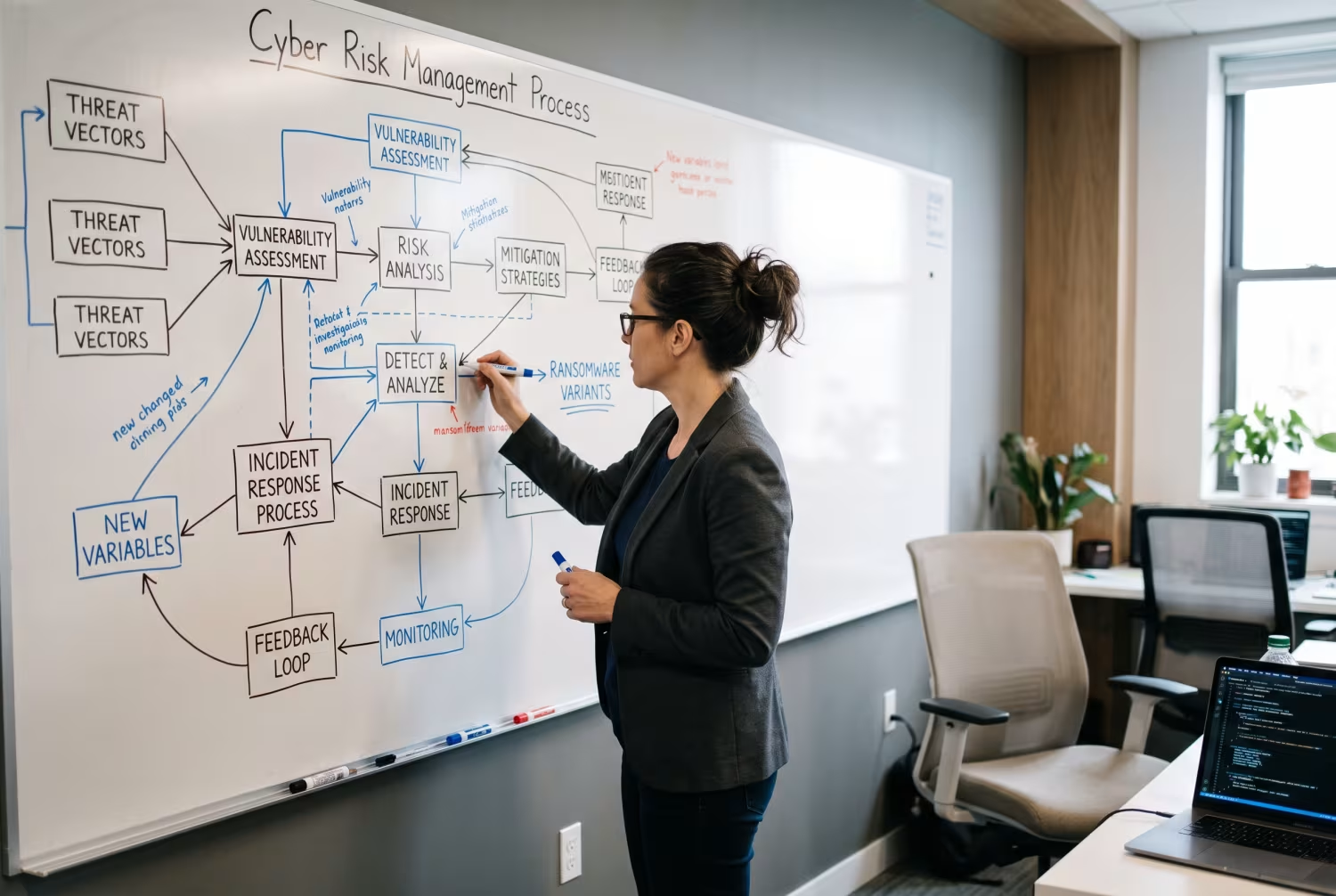
A documented cyber risk management process can look impressive on paper, often laying out how to identify risks, assess impact, and decide on action. Yet that framework existing doesn't mean a team finds it any easier to manage threats day to day.
The trouble is that documentation sits still while the threat landscape keeps moving. A process written months ago may not reflect new attack methods or new technology, so teams can end up following steps that no longer match the situation in front of them.
Even when the process is sound, the workload behind it can stay overwhelming. Staff may fall behind on alerts, patching, and compliance tasks, and without enough people or the right skills supporting the plan, it turns into a checklist instead of a living tool.
What's missing, ultimately, is flexibility. Real risk management means adjusting to what's happening right now, not just what was written down earlier, and that gap between documentation and daily control shows up in businesses well beyond any one industry or region.
Documentation can look like control, and that appearance is exactly what makes it risky: when leaders assume a documented process is enough, they often underfund the resources that actually reduce risk.
Understaffing: A team stretched too thin can't keep up with threats no matter how good the process looks, and important steps get skipped under pressure.
Workflow gaps: Documentation rarely accounts for every real-world scenario, so when something unexpected happens, teams need the freedom and training to respond rather than hunting for a script that doesn't exist.
Missed investments: Leaning on paperwork can delay spending on better tools, automation, or training, which leaves a false sense of security sitting on top of real gaps.
Add these costs together over time and the business ends up carrying more risk, not less, with the very process meant to help now standing in the way of real improvement.
A process is only as good as the people and routines that carry it out, which means cyber risk management has to be more than a document — it has to shape how a team acts every single day.
Clear roles: When everyone knows their part in managing cyber risks, nothing falls through the cracks the way it does when responsibility is vague.
Regular updates: Reviewing and updating the process as threats change keeps it relevant instead of outdated.
Training: Ongoing training lets teams handle new risks and technologies, something a static process can never teach on its own.
Open communication: Sharing problems and near-misses, instead of burying them, lets a team learn and adapt together.
Resource support: None of this holds up without management backing the process with enough people, time, and tools.
Put these pieces together and the process stops being a file on a server and becomes a living part of the business instead.
Documentation does carry real value: it standardizes how risks get identified and managed, and it's often required for compliance. What it can't do is replace active, ongoing attention to cybersecurity risks.
A documented risk management framework, for instance, can guide a team through regular assessments and audits, helping spot gaps and track improvement over time. But the moment it stops being updated or followed in practice, it loses that power.
In Arizona, businesses may also face specific regulations requiring certain documentation, and meeting those rules is necessary — but it's only one piece of a complete risk management program. The real test still comes down to how a team responds when something unexpected actually happens.
Since documentation can't respond to anything by itself, the people and workflows behind it are what actually reduce exposure to cyber threats. A binder can't spot a phishing email or contain a ransomware attack — a team does that.
Skilled staff: Investing in training and hiring has a direct impact on the ability to manage risk, since people are the ones who have to recognize threats and act on them.
Efficient workflows: Streamlined routines for patching, monitoring, and incident response keep risk in check, while bottlenecks and confusion slow everything down.
Empowered decision-making: Teams need the trust to make quick decisions, because a rigid process that requires approval at every step only slows the response.
Continuous improvement: Regular reviews and feedback let a team learn from both mistakes and successes, keeping its strategies sharp over time.
Focus on people and workflows, and a documented process finally turns into real-world action.
Given all that, it's worth asking whether an organization is leaning too hard on paperwork. A few warning signs tend to show up together:
Spotting even a couple of these signs is reason enough to look past the documentation and invest in the people and workflows that actually move the needle.
Closing that gap takes more than a checklist — it takes a set of deliberate changes to how a team operates.
Check whether enough skilled people are available to handle the workload, and consider hiring or outsourcing if they're not.
Schedule reviews of the risk management framework so it stays aligned with current threats and technologies.
Give staff ongoing education so they can recognize and respond to new cybersecurity risks as they appear.
Hand routine tasks to tools so the team has room for more complex work.
Build channels where staff can surface problems and suggest workflow improvements.
Run drills or tabletop exercises to see how the team handles real incidents, not just what the plan says should happen.
Taken together, these steps shift the organization from relying on documentation to building a culture of active, practical risk management.

If you’re running a business with 15 to 100 users, you probably have some form of cyber risk management process on file—but you may still feel exposed. At Hart Technology Solutions, we understand that paperwork alone doesn’t make your daily security challenges any easier.
Let’s look together at how our team approaches the people, workflows, and support that actually reduce risk, not just record it. We invite you to start a conversation about your setup and see how practical changes can make a difference.
Try our 90-day risk-free trial with a $1,000 satisfaction guarantee—designed for businesses who want to see real results from their cyber risk management efforts.
A risk management framework should be reviewed at least annually, with more frequent reviews warranted when technology or the threat landscape changes quickly. Regular updates keep the process relevant and effective as new risks emerge.
Cybersecurity risk management focuses on identifying, assessing, and mitigating risks tied to digital assets and information systems, while traditional risk management spans a broader range of threats, including physical, financial, and operational ones. Both aim to protect the organization, but cybersecurity risk management addresses the specific challenges that digital threats create.
Regular training, clear communication, and a quick response to incidents are strong indicators. A team that actively reports issues, updates procedures, and participates in drills or simulations is generally following best practices for managing cyber risk.
A documented plan can grow outdated or get ignored without ongoing training, resource investment, and workflow improvements behind it. Relying on documentation alone creates a false sense of security that leaves the organization exposed to new or evolving threats.
Review the current process, update it to reflect new threats, and make sure the team has the training and resources it needs. Automating routine tasks, encouraging feedback, and testing response plans regularly all help keep the process effective.
.jpg)
Trey Hart is the Owner of Hart Technology Solutions, bringing together deep IT expertise and strong business leadership. With a degree in Information Systems from Georgia Southern University and an MBA from the University of Arizona, Trey blends technical insight with strategic vision.