Owner

A managed threat detection and response service only delivers real protection when the provider is empowered to act, not just alert. Businesses paying for monitoring alone may still suffer the full consequences of a breach if no one is authorized to intervene in time.
A system built for managed threat detection and response can only help if it does more than flag a problem. Detection starts the clock: software spots a strange login or an odd file, sends an alert, and then waits.
What happens next determines whether that alert becomes a footnote or a disaster, and in many setups, the handoff between "spotted" to "stopped" depends entirely on a human being free to notice the alert and act on it fast enough.
That delay carries a price. A breach that goes undetected for over 100 days can cost more than $1 million extra compared to one found sooner. The gap between detection and action, in other words, is where the real damage accumulates.
Managed detection and response services exist to close that gap: they pair monitoring tools with security experts trained to catch suspicious activity as it happens. Yet unless those experts hold the authority to act directly, rather than simply reporting what they see, a business can still absorb the full force of an attack despite having eyes on the network the entire time.

Many companies invest in security operations built around monitoring and alerting. These setups flag unusual activity, such as a strange login or a suspicious file, and pass a warning to the IT team. On its surface, that looks like a solid safety net.
Look closer, though, and the net has a hole in it: if the team watching the network can only alert, not act, a critical gap opens between spotting trouble and stopping it. That stretch of time, between the alert landing in an inbox and someone actually responding, is exactly when attackers do their worst damage, since they move fast and every minute of hesitation works in their favor.
The gap bites hardest at businesses without a dedicated in-house security team ready around the clock. Even the sharpest monitoring tools cannot compensate for a lack of authority to act, which means downtime, data loss, or worse can unfold while everyone watches it happen.
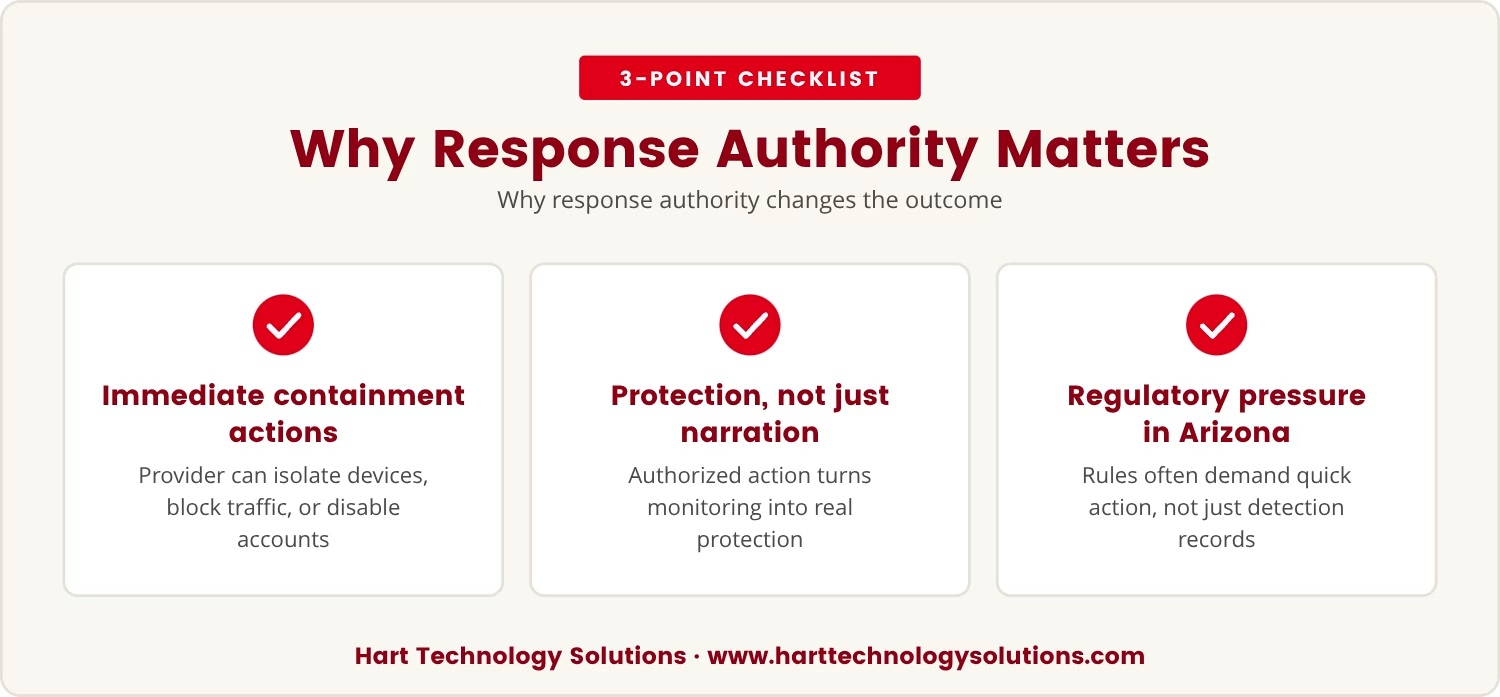
Give a managed detection and response provider the authority to act, and the entire sequence changes. Rather than stopping at a warning, the provider can isolate an infected device, block malicious traffic, or shut down a compromised account immediately.
That speed matters: an attack interrupted early never gets the chance to spread. Shortening the time a threat spends inside the network directly shrinks the cost and damage of a breach, since every extra hour an attacker lingers undetected adds to both the harm done and the price of cleaning it up afterward.
Authorizing an MDR provider to act, then, turns monitoring into protection rather than narration. For businesses in Arizona, this distinction carries added weight, since regulations and industry standards often demand quick action to safeguard sensitive data, not just a record that something was noticed.

Some businesses in Arizona lean on managed threat detection and response for peace of mind, yet not all MDR services deliver the same thing. What separates them is what happens the moment after a threat surfaces.
A true MDR service pairs advanced threat detection with the authority to respond on a business's behalf, meaning the provider steps in rather than simply watching. That can mean quarantining a compromised endpoint, blocking a suspicious connection, or rolling back harmful changes before anyone on the internal team even knows there was a threat.
Strip away that authority, and the business is left reacting after the fact, a delay that can turn a minor incident into a major breach. Anyone evaluating an MDR solution should ask directly whether the provider is empowered to act or simply positioned to alert.
Knowing where alert-only MDR ends and action-enabled MDR begins makes the decision easier. The distinctions below cover the points that matter most:
A provider with response authority can act the instant a threat appears, while an alert-only service waits on the availability of someone internal. That difference in timing is often what separates a contained incident from a spreading one.
Action-enabled services contain or remove a threat before it spreads, cutting off the path to wider damage. Alert-only setups, by contrast, leave that containment step to whoever reads the alert.
When a provider acts directly, internal IT staff can spend their energy on other priorities rather than scrambling to answer every alert. That shift alone frees up meaningful time during a busy week.
Clear authority means everyone knows exactly who stops a threat when one appears, which removes the confusion that otherwise creeps in during an incident. That clarity itself speeds up the response.
Certain industries require fast response times as a matter of regulation. A provider with the authority to act helps meet those standards more reliably than one who can only report after the fact.
Providers with the right permissions follow set protocols, so threats get handled the same way every time rather than depending on who happens to be on call. That consistency becomes its own form of reliability.
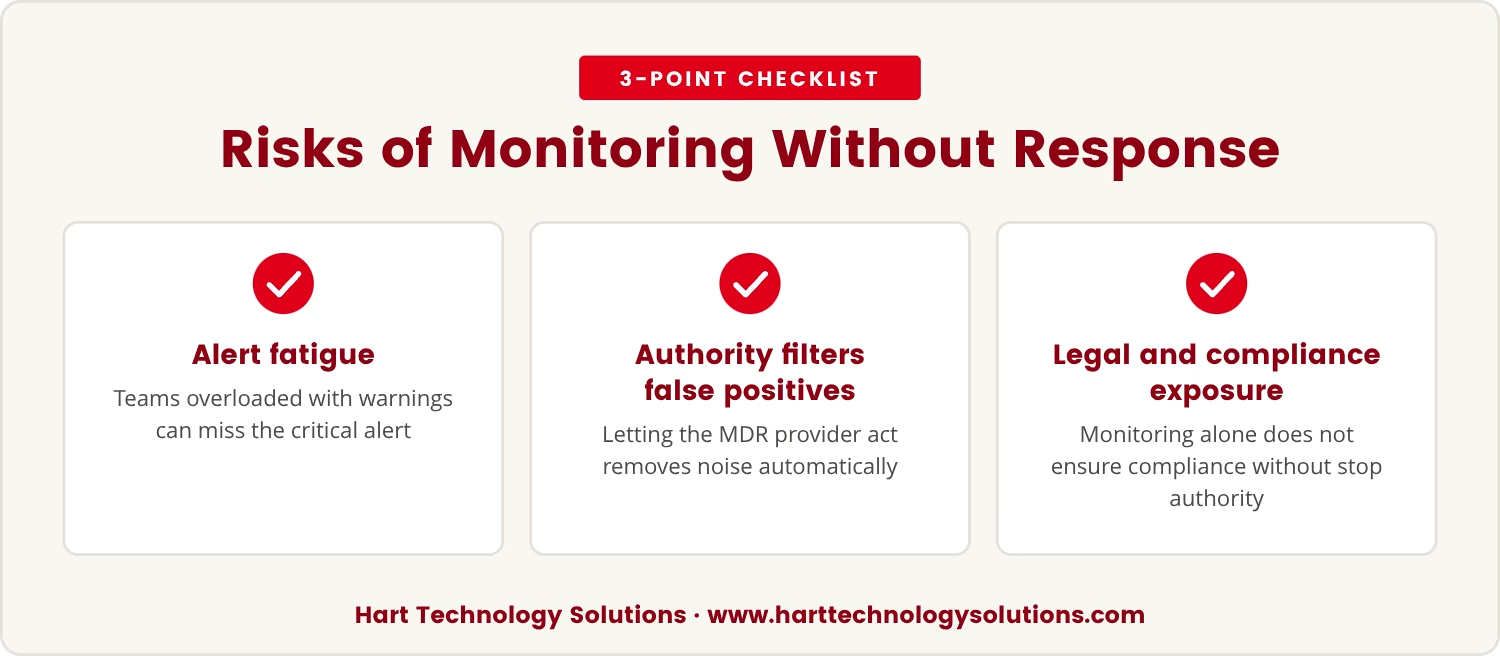
Monitoring alone can look sufficient, especially alongside some in-house security expertise, but relying on alerts without granting response authority opens several risks that stay hidden until something goes wrong.
Attackers move quickly once they are inside a network, so a response that depends on a person noticing an alert and then acting manually risks losing exactly the time that matters. Even a short delay can let ransomware spread or sensitive data walk out the door.
Alert fatigue compounds the problem: a team swamped with warnings can easily miss the one alert that actually matters. Give the MDR provider authority to act, though, and false positives get filtered out automatically, leaving only the incidents that genuinely need attention.
Legal and regulatory exposure follows close behind for businesses in Arizona, since monitoring alone does not guarantee compliance if no one holds the authority to stop a breach while it's still in progress.
Choosing a managed detection and response provider means looking past the features list and asking sharper questions. These stand out as the ones worth asking directly:
The real value of an MDR service lies not in finding threats but in stopping them before they cause harm. A provider limited to alerting leaves a business to absorb the full impact of a breach anyway, including lost data, downtime, and reputational damage.
Pairing detection with the authority to act closes the gap between knowing about a threat and doing something about it, which lowers risk, saves time, and can reduce the overall cost of a security incident.
Anyone relying on managed security services should ask directly: does the provider have the power to protect the business, or is it only sounding the alarm?
Many companies with 15 to 100 users find themselves with monitoring in place but no clear authority for fast action when a threat appears. At Hart Technology Solutions, we know this gap can make all the difference during a security incident.
We invite you to see how we approach managed response—so you can decide if your current setup is truly protecting your business or just alerting you to problems.
Try our MDR service risk-free for 90 days and get a $1,000 satisfaction guarantee—available to qualified businesses ready to close the gap between detection and action.
Start your 90-day risk-free trial
A traditional security solution typically focuses on prevention and basic monitoring, such as firewalls and antivirus software. An MDR service goes further, actively monitoring, detecting, and responding to threats in real time, usually backed by a team of security experts who can take direct action when authorized.
Threat intelligence helps MDR providers identify new and emerging threats by analyzing data drawn from many sources. That analysis lets them recognize suspicious patterns faster and respond more effectively to attacks aimed at a given business.
Yes, most MDR providers are built to integrate with existing security tools and systems already in place. They draw on that existing security data to sharpen detection and response, getting more value out of investments already made.
EDR forms a core part of many MDR solutions, focused on monitoring and responding to threats on individual devices like laptops and servers. MDR builds on EDR by adding broader network monitoring and expert response for more complete coverage.
Look for proven security expertise, clearly defined response protocols, and the authority to act without waiting for sign-off on every step. Checking the provider's track record, support options, and willingness to tailor its approach to a specific business rounds out the picture.
.jpg)
Trey Hart is the Owner of Hart Technology Solutions, bringing together deep IT expertise and strong business leadership. With a degree in Information Systems from Georgia Southern University and an MBA from the University of Arizona, Trey blends technical insight with strategic vision.