Owner

An IT infrastructure consulting project only delivers real value when it starts with a documented assessment, not a consultant’s product roadmap. Skipping this step often leads to solutions that fit the consultant’s interests instead of your operational needs.
An IT infrastructure engagement typically opens one of two ways: a consultant studies the systems already in place, or a consultant arrives with a roadmap built around products they already favor. The path chosen at that first step decides whether the project solves a real problem or just installs something new.
A snippet-friendly insight: Skipping a thorough assessment at the start of an IT consulting engagement can lead to solutions that fit the consultant's preferences, not your business needs. Too often, companies jump straight to product recommendations, missing the chance to understand what's really holding them back.
A documented assessment is more than a checklist; it's a structured look at current infrastructure that surfaces gaps and risks nobody had flagged before. Skip that step, and there's no way to know whether the changes being paid for will actually touch the operational problems causing trouble.

Quick results are the draw when a business brings in a consulting firm, and a consultant's product roadmap, promising fast improvement, is easy to trust on that basis alone. Moving forward without a documented infrastructure assessment, though, tends to bury costs that surface only later.
Skip the assessment, and the money on the table risks funding technology that never touches the real problem. A new server or cloud service gets sold, say, when the actual culprit is outdated network infrastructure. That mismatch doesn't just fail to help — it tends to add downtime and disruption in place of the smoother operations that were promised.
An assessment, by contrast, lays out the true state of the systems in question. It points to where modernization or optimization is actually needed and where the current infrastructure is already holding up fine, so the budget lands on what matters instead of scattering across upgrades nobody asked for.
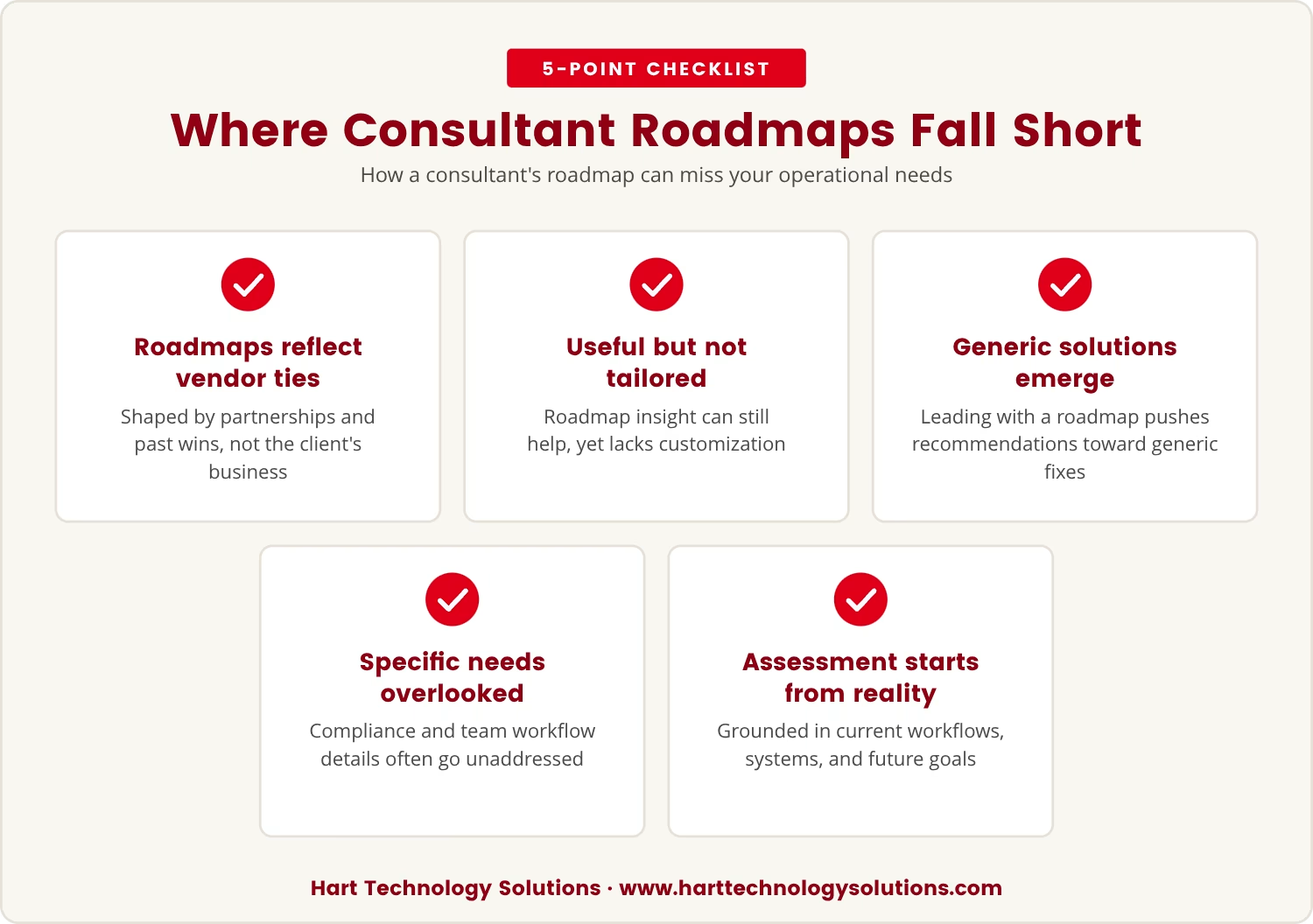
A consultant's product roadmap usually reflects their partnerships, preferred vendors, or past wins more than it reflects the business in front of them. Those roadmaps can still carry useful insight, but useful is not the same as tailored.
When a consulting firm leads with its own roadmap instead, the solutions that follow tend toward the generic. Specific compliance requirements, security and compliance needs, or the way a particular team actually works often go unaccounted for, which is how infrastructure solutions end up looking impressive on paper while doing little for the day-to-day.
A documented assessment turns that around by starting from operational reality: current workflows, existing systems, future business goals. Recommendations built on that foundation answer what the business actually needs rather than what a consultant has on offer.

A documented assessment is the foundation under any IT infrastructure consulting engagement worth the name, since every decision that follows depends on it for direction.
Without it, decisions rest on assumption rather than evidence. Symptoms get treated while root causes stay hidden, which is exactly how the same issues keep resurfacing and resources keep getting spent twice. An assessment replaces guesswork with a clear picture of where the infrastructure is strong and where it isn't, so effort goes toward the changes that will actually move the needle.
For businesses in Arizona, where regulations and operational needs can vary, this step carries even more weight — a thorough assessment is what keeps compliance, security, and room for growth aligned at once.
A strong assessment process covers several important areas. Here's what you should expect:
The consultant reviews existing hardware, software, and network infrastructure. This step identifies what's working and what needs attention.
The assessment highlights where infrastructure falls short of business needs, whether that's performance, security, or scalability.
Potential risks, such as cybersecurity threats or outdated systems, get identified and documented, which clarifies exactly where the greatest vulnerability sits.
Systems get checked against relevant regulations and industry standards, confirming legal and contractual obligations are actually being met.
Findings translate into practical infrastructure guidance, specific to the business and aimed at the problems that are real rather than theoretical.
Not all issues carry equal urgency, so the assessment ranks actions by impact and risk, which is what makes resource allocation a decision rather than a guess.
Findings and recommendations get recorded clearly, creating a record that tracks progress and informs decisions going forward.
Starting with a documented assessment pays off first by keeping every infrastructure change tied to a real need rather than a sales agenda, which in turn means fewer surprises and steadier systems down the road.
It also hands over a clear understanding of what the actual infrastructure challenges are, and that clarity supports decisions aligned with business continuity and longer-term goals.
Finally, because the pressing issues are now visible, spending can concentrate there instead of spreading thin, which means more value for the investment and less exposure to costly missteps.
Businesses that bypass the assessment phase often encounter the same problems:
For businesses in Arizona, the local environment adds another layer of complexity, since regulations, industry standards, and operational needs can differ from other regions. A documented assessment accounts for these factors directly, which is what keeps the resulting infrastructure solutions both practical and compliant.
Grounding IT infrastructure optimization efforts in a thorough assessment, as a result, means choices fit the business in front of them rather than whatever happens to be trending industry-wide — and that's the foundation digital transformation needs to actually last.
A successful IT infrastructure consulting engagement doesn't start with a product pitch; it begins with a careful, documented look at current systems and needs. That assessment-first approach is what protects a business from costly mistakes and keeps every change tied to its operational goals.
Before bringing in a consultant, then, it's worth asking: is a real assessment on the table, or just a roadmap to someone else's preferred products? The answer can make all the difference for your business.
If your business has 15 to 100 users, you’re likely weighing big decisions about your IT setup and want to avoid wasted investments. At Hart Technology Solutions, we know how easy it is to get pushed toward solutions that don’t fit your real needs.
We invite you to see how our team approaches infrastructure consulting—starting with a documented assessment that puts your business first.
Qualified businesses can try Hart Technology Solutions for 90 days risk-free and get a $1,000 satisfaction guarantee, making your first step toward better infrastructure worry-free.
Recurring IT problems, plans for growth, or new compliance requirements are all signs an infrastructure assessment is overdue. It's also worth doing if the systems haven't been reviewed in several years or a move to managed IT services is on the table.
A consultant reviews hardware, software, network, and security policies, then documents findings, identifies risks, and provides recommendations tailored to the business. The process usually involves interviews, system scans, and a review of operational workflows.
Yes — a thorough assessment is a key first step in any digital transformation project, since it clarifies current capabilities and pinpoints the changes needed to support new technologies or business models.
An assessment includes a review of infrastructure security, looking for vulnerabilities across systems, networks, and processes, with recommended steps to strengthen defenses and reduce the risk of cyberattacks.
An assessment focuses on understanding current infrastructure and identifying areas for improvement, while an audit is typically more formal, checking for compliance with specific standards or regulations. Both have their use, but an assessment is usually the starting point for practical infrastructure improvements.
.jpg)
Trey Hart is the Owner of Hart Technology Solutions, bringing together deep IT expertise and strong business leadership. With a degree in Information Systems from Georgia Southern University and an MBA from the University of Arizona, Trey blends technical insight with strategic vision.